A gas furnace has a clear job: start on command, burn cleanly, move warm air, and shut off without drama. When it misses one of those steps, energy costs rise and comfort drops. The decision to repair or replace depends on safety, age, parts availability, and the way the furnace behaves under load during a Connecticut winter. For Middlefield homeowners near Powder Ridge, Lyman Orchards, and the Coginchaug River, the stakes feel higher: the temperature can swing 30 degrees in a day, and wind off the ridgelines exposes any weaknesses in a duct system or a blower motor.
Direct Home Services supports Middlefield (06455, 06481) and nearby Rockfall with a full set of gas furnace services. The team handles emergency heating service, annual tune-ups, high-efficiency installations, and honest guidance on whether to fix the old workhorse or install a new system. This article breaks down how a pro evaluates that choice, what symptoms matter, and why the right call can cut fuel usage by 15–35% in New England homes.
What decides repair vs. replacement
A technician looks first at safety, then reliability, then efficiency. Safety includes the condition of the heat exchanger, the quality of the flame, and the venting system. Reliability focuses on critical components such as the ignitor, flame sensor, gas valve, draft inducer motor, and blower fan. Efficiency considers AFUE rating, duct leakage, filter resistance, and thermostat control strategy.
Age influences every call. A natural gas or propane furnace will often deliver 15–20 years if maintained, and sometimes longer in a clean mechanical room with stable power. That said, once repair costs stack over two or three visits in a heating season or a major part like the heat exchanger fails, replacement becomes the economical move. High-efficiency condensing furnaces with 95–98% AFUE can cut fuel spend compared to a 20-year-old 80% unit, and they modulate heat output to match load during shoulder seasons.
In Middlefield, bitter cold often exposes weak limit switches and dirty filters. Short cycling is common during January cold snaps, and so are cracked ignitors after a power surge. The cost of multiple urgent calls adds up quickly. A careful inspection and a candid cost comparison usually provides the clearest answer.
Clear signs a repair makes sense
Minor ignition problems, a dirty flame sensor, or a clogged air filter often produce symptoms that look serious but resolve with proper maintenance. A yellow flame or a clicking noise might point to a dirty burner assembly or a tired ignitor. These fixes are straightforward. So are issues caused by a loose condensate drain on a high-efficiency condensing furnace that trips the pressure switch, or a thermostat that needs a fresh set of batteries and a proper heat-cycle setting.
Another repair-worthy scenario is a draft inducer motor bearing that whines but still runs, provided the heat exchanger is intact and the rest of the system tests clean on combustion analysis. Replacing a worn inducer motor or a limit switch can buy several more years if the furnace has no corrosion and shows steady temperature rise across the heat exchanger. Rebalancing ductwork or sealing obvious leaks can also resolve uneven heating in homes around Reeds Gap and Baileyville without touching the core appliance.
Clear signs replacement is the better call
A cracked heat exchanger moves the decision from “maybe” to “must.” It introduces a carbon monoxide risk and cannot be ignored. While rare in younger units, cracked exchangers show up in older furnaces that ran with restricted airflow or a dirty filter for long periods. The same is true for furnaces that short cycle: repeated heat stress can warp metal over time.
Frequent high-dollar repairs are another tipping point. If the gas valve, control board, and blower motor all fail over a short window, replacement can be cheaper than continuing to chase additional failures. Parts availability also matters; if the manufacturer no longer stocks a specific board for a 20-year-old model, downtime stretches, and emergency heat costs climb.
A furnace that runs but wastes gas is a quiet budget drain. An older single-stage unit that overshoots and undershoots room temperature, combined with a leaky duct system, can waste 20–30% of delivered heat. A modern two-stage or modulating furnace with an ECM blower and proper static pressure can stabilize room temperature, reduce noise, and shave real dollars off the monthly bill. For homeowners near Lake Beseck or Jackson Hill, that comfort upgrade is noticeable on subfreezing nights.
How pros evaluate the system during a service call
Technicians start with the basics: the thermostat call for heat, the inducer sequence, ignition, flame rectification, blower timing, and shutdown. They check static pressure across the filter and coil, verify temperature rise against the data plate, and record combustion numbers to confirm clean burn. They also look for scorched wiring, rust in the burner compartment, and signs of flame rollout.
Direct Home Services technicians specialize in inspecting the heat exchanger for hairline fractures and cleaning the flame sensor to prevent ignition lockout. Small issues get solved on the spot. Larger issues get priced honestly with repair and replacement options side by side. If the home uses propane and sits on the windy side of Powder Ridge, wind-related vent issues get extra attention. The goal is stable ignition and steady airflow with code-compliant venting and proper condensate management.
Common symptoms and what they mean in a Middlefield winter
Short cycling wastes fuel and stresses parts. In practice, short cycling during a cold snap often points to a clogged air filter, a faulty limit switch, or a draft inducer motor that can’t pull enough air through a frosted vent. Replacing the filter, clearing the vent, and confirming inducer performance usually resolves it. If it returns, the furnace may be oversized or the ductwork undersized for the static pressure it needs.
Uneven heating shows up in colonials around Rockfall and Lake Beseck where older ducts run through unconditioned spaces. A struggling blower motor can aggravate this, as can a clogged evaporator coil above the furnace. Sealing key duct joints, adjusting blower speed taps, and selecting the right MERV 11–13 filter to balance filtration and airflow will often stabilize bedroom temperatures.
A yellow pilot light or unsteady main flame can signal a burner issue, a gas valve problem, or an obstruction in the vent pipe. Gas furnaces should show a crisp blue flame with minimal yellow tips. If yellow color persists, the furnace needs immediate attention to prevent soot and carbon monoxide production.
Metallic banging noises at startup can be harmless duct “oil-canning,” but repetitive banging paired with frequent cycling may point to a failing draft inducer motor or severe airflow restriction that triggers rapid on-off behavior. A brief inspection sorts the harmless from the risky.
What homeowners can check before calling
- Confirm the thermostat is in heat mode, with a fresh set of batteries if it uses them, and a call for heat above room temperature. Check the air filter. If it looks dirty or has been in place longer than three months, replace it with the correct size and MERV rating. Look outside at the vent termination on condensing furnaces. Clear shrubs, snow, or nests blocking intake or exhaust. Listen for the inducer motor at startup. A loud squeal or rattle deserves prompt service but helps describe the issue when calling. Note error codes on the furnace control board if a sight glass is present. A quick photo helps the technician bring the right parts.
These steps won’t fix deeper issues, but they prevent wasted trips and speed up diagnosis. If a carbon monoxide detector alarms, evacuate and call for emergency heating service right away.
Gas furnace options: what fits Middlefield homes
For replacements, most homes see strong results with high-efficiency condensing furnaces (95–98% AFUE). These units extract more heat from the flue gases and use PVC venting. In tight homes or those with long vent runs, a modulating furnace with an ECM blower maintains steady comfort across long heating cycles and low noise.
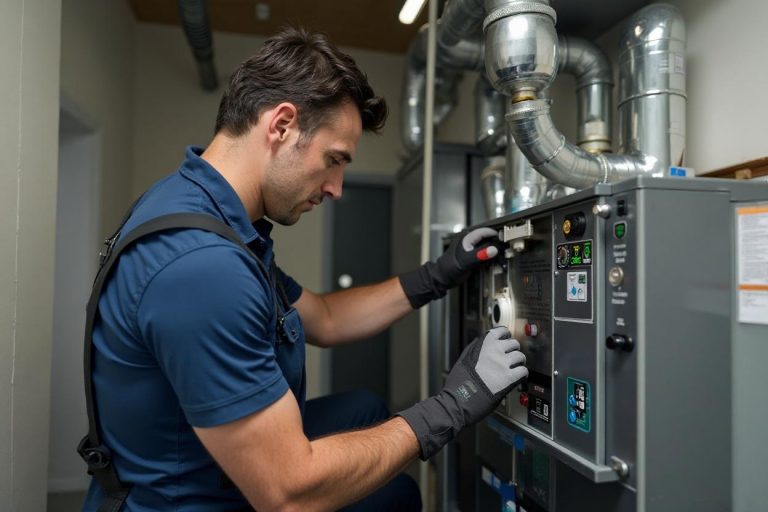
Single-stage furnaces are common in older homes and can still be a reasonable budget choice when paired with well-sealed ducts. Two-stage furnaces improve comfort and reduce swings while cutting fuel usage. Modulating models take that a step further with fine control that shines during shoulder seasons when small heat calls dominate.
Direct Home Services installs high-efficiency condensing gas furnaces with modulating burners to match New England’s load profile. The team services natural gas and propane (LP) furnaces and can size equipment using Manual J load calculations to avoid oversizing, which is a frequent cause of short cycling and uneven heat.
Brands, parts, and what matters long term
A reliable furnace rests on proven components: a durable heat exchanger, a stable control board, a quiet draft inducer motor, and a smooth, efficient blower. Replacement parts availability matters for service continuity, and so does local support. Direct Home Services provides expert maintenance for all major manufacturers including Rheem, Bryant, Goodman, and York, and installs Carrier, Trane, Lennox, and American Standard systems for homeowners who want top-tier comfort, low noise, and Energy Star performance. As a Carrier authorized specialist, the team offers the latest Infinity series furnaces known for high efficiency and strong dehumidification control when paired with matched air conditioning equipment.
For hybrid needs, Mitsubishi dual fuel systems can combine a heat pump with a gas furnace for flexible operation, though many Middlefield homeowners stay with straight gas due to winter lows and existing gas service. The right choice depends on insulation levels, duct layout, energy pricing, and comfort goals.
The maintenance difference: small tasks, big payoffs
Most breakdowns that trigger emergency calls traced back to airflow and ignition. Annual tune-ups catch these weak points before the first frost. An effective visit includes burner cleaning, flame sensor service, ignitor inspection, blower wheel cleaning as needed, condensate trap cleaning for condensing models, and verification of temperature rise and static pressure. It also includes a safety check of the limit switch, rollout switches, and wiring, plus a quick review of the vent pipe and termination.
Direct Home Services performs a 21-point safety and performance inspection with a focus on the heat exchanger’s integrity and the efficiency of the inducer motor. The team checks for hairline fractures that can produce a carbon monoxide risk and confirms proper flame rectification after cleaning the dirty flame sensor. These tasks extend equipment life and help keep gas bills stable.
Local context: why Middlefield homes need a precise approach
Middlefield sits in a semi-rural pocket of Middlesex County with older housing stock near Rockfall and newer renovations around Lake Beseck. Homes near the Durham line face exposed conditions that punish undersized or leaky ducts. Residents spend winter weekends at Powder Ridge and come home expecting steady heat, quiet operation, and safe venting even during high winds. These conditions reward furnaces with strong inducer performance, clean combustion, and balanced airflow.
Direct Home Services is minutes from Lyman Orchards and responds quickly throughout the 06455 area. The team provides priority heating repairs in Middlefield and Rockfall, and supports neighboring towns including Middletown, Durham, Meriden, Wallingford, and Higganum. That proximity matters during blizzards and ice storms when a fast ignition fix or a blower replacement makes the difference between a warm house and a hotel stay.
Cost judgment: repair now or plan a replacement
A practical rule used in the field compares repair cost to replacement value and age. If a repair exceeds 25–30% of the price of a new furnace and the unit is more than 12–15 years old, replacement often offers better long-term value. For a younger furnace with a known good heat exchanger and a single failed part, repair is the clear choice.
Energy savings add up quickly. Shifting from an 80% AFUE furnace to a 96% model can reduce gas usage by roughly 20% under similar conditions. Over five winters in Middlefield, that difference can fund a significant portion of the install cost, especially if utility rates rise. Many homeowners choose to replace preemptively in late summer or early fall to avoid emergency timing and to access off-season install schedules.
Financing options help spread the cost. Direct Home Services offers flexible plans and can pair new installations with an energy audit to identify duct sealing and insulation upgrades that maximize the furnace’s impact. Energy Star rated systems are available and often qualify for rebates that reduce the net cost further.
What to expect during a Direct Home Services visit
A typical service call starts with listening. The technician notes symptoms such as frequent cycling, hot and cold rooms, or a metallic banging noise at startup. The pro checks filter size and condition, confirms thermostat settings, and scans for any error codes on the control board. A combustion analysis follows on gas furnaces, and a quick duct inspection focuses on return restrictions that can trip the limit switch.
If a repair is appropriate, it is completed the same day in most cases. If replacement fits better, the technician lays out options that include single-stage, two-stage, and modulating furnaces from trusted brands. The proposal shows AFUE ratings, expected comfort differences, and any upgrades such as MERV 11 or MERV 13 filters, a new ECM blower, or a smart thermostat that supports staging.
Homes near Lake Beseck and Jackson Hill often benefit from quiet fan profiles and low continuous circulation to blend air in two-story layouts. The team tunes blower speeds to match duct sizing and confirms static pressure after installation to keep the system within manufacturer specs.
Safety and code compliance
Furnace safety is a non-negotiable. Vent pipe slope, combustion air, gas valve operation, and the integrity of the heat exchanger must meet code. Direct Home Services’ technicians hold valid Connecticut S-1 licenses and NATE certifications, and they follow local mechanical codes. The company is BBB accredited, carries full insurance, and documents all safety checks. This matters for resale, warranty coverage, and insurance claims after a storm.
For best gas furnace repair services households with elderly family members or young children, 24/7 emergency dispatch provides a safety net during furnace failures. The team stocks common parts such as ignitors, flame sensors, limit switches, and inducer motors for popular models from Goodman, Bryant, York, and Rheem, reducing downtime during peak demand.
Service area specifics and response time
Located near Lyman Orchards and close to the Coginchaug Valley, Direct Home Services reaches most of Middlefield and Rockfall quickly, including Reeds Gap, Baileyville, Lake Beseck, and Jackson Hill. The coverage area extends into Middletown, Durham, Meriden, Wallingford, and Higganum. In practical terms, that proximity shortens “no heat” response during a blizzard when roads are slick and supply houses may close early. The team prioritizes 06455 and 06481 during weather events and communicates realistic arrival times.
Answers to common Middlefield questions
Is a tune-up worth it for a newer furnace? Yes. Even a three-year-old furnace can trip on a dirty flame sensor or run hot due to a restrictive filter. An annual tune-up maintains efficiency and prevents nuisance lockouts that always seem to happen on the coldest night.
How long should a furnace run per cycle during cold weather? In a well-sized system with a two-stage or modulating furnace, cycles can stretch to 15–30 minutes or longer at low fire. Short two to five minute runs signal oversizing, a control issue, or a limit switch problem due to airflow.
What filter should be used? MERV 11 is a solid default for most homes with standard ductwork. MERV 13 improves air quality but can add resistance. The blower must handle the added static pressure. During a tune-up, a technician can measure static and confirm the right filter choice.
What about carbon monoxide? Proper combustion and venting keep CO out of living spaces. If a detector alarms, leave the home and call for help. During routine service, the technician conducts a combustion test and inspects for heat exchanger cracks or vent issues.
Does Direct Home Services handle older brands? Yes. The team services Rheem, Bryant, Goodman, York, and others, and installs Carrier, Trane, Lennox, and American Standard systems. Parts availability guides repair timelines, but most common components are stocked on service trucks.
A practical path forward for Middlefield homeowners
A furnace that runs right saves money and avoids stress during a Nor’easter. For some homes, that means a focused repair: an ignitor replacement, a cleaned flame sensor, a new limit switch, or a blower motor swap. For others, especially those facing a cracked heat exchanger or repeat failures, a replacement with a high-efficiency condensing furnace provides better comfort and lower monthly bills.
Direct Home Services keeps the decision grounded in facts: safety findings, age, repair history, and a straight cost comparison. For households across Middlefield and Rockfall in the 06455 zip code, the company offers a $99 Seasonal Furnace Safety Inspection to get ready for the first frost. Every inspection includes a heat exchanger review, inducer and blower checks, and a combustion test to verify clean operation.
Schedule your furnace repair or request a free estimate on a new Energy Star rated system. Ask about financing for Middlefield homeowners and same-day emergency service during storms. The team stands behind every repair and installation with a clear parts and labor warranty, and every install is 100% code-compliant under CT S-1 licensing.
Quick reference: when to repair vs. replace
- Repair makes sense for clean systems with a single failed part, such as an ignitor, flame sensor, limit switch, or inducer motor, and a furnace under 12–15 years old. Replace if the heat exchanger is cracked, if expensive parts fail in clusters, if the furnace is 15–20+ years old, or if energy use is high despite regular maintenance. Consider replacement to upgrade from 80% AFUE to 95–98% AFUE with two-stage or modulating control for steadier comfort and lower gas bills. In homes with uneven heat, address duct and airflow issues along with the furnace decision to fix the root cause. For condensing furnaces, inspect the vent and condensate system before each heating season to prevent nuisance trips and lockouts.
Middlefield winters are tough on equipment. With the right plan and a responsive local partner, heat stays steady, bills stay predictable, and the house stays comfortable from the first frost through the last thaw. Direct Home Services is ready to help with gas furnace services that keep homes warm near Powder Ridge, Lyman Orchards, Wadsworth Falls, and beyond. Book the $99 safety inspection or call for 24/7 emergency heating help today.
Direct Home Services provides HVAC repair, replacement, and installation in Durham, CT. Our team serves homeowners across Hartford, Tolland, New Haven, and Middlesex counties with energy-efficient heating and cooling systems. We focus on reliable furnace service, air conditioning upgrades, and full HVAC replacements that improve comfort and lower energy use. As local specialists, we deliver dependable results and clear communication on every project. If you are searching for HVAC services near me in Durham or surrounding Connecticut towns, Direct Home Services is ready to help.
Direct Home Services
57 Ozick Dr Suite I
Durham,
CT
06422,
US
Phone: (860) 339-6001
Website: https://directhomecanhelp.com/
Social Media: Facebook | Instagram
Map: Google Maps